
IV Ketamine
Breakthrough Relief for Treatment-Resistant Conditions
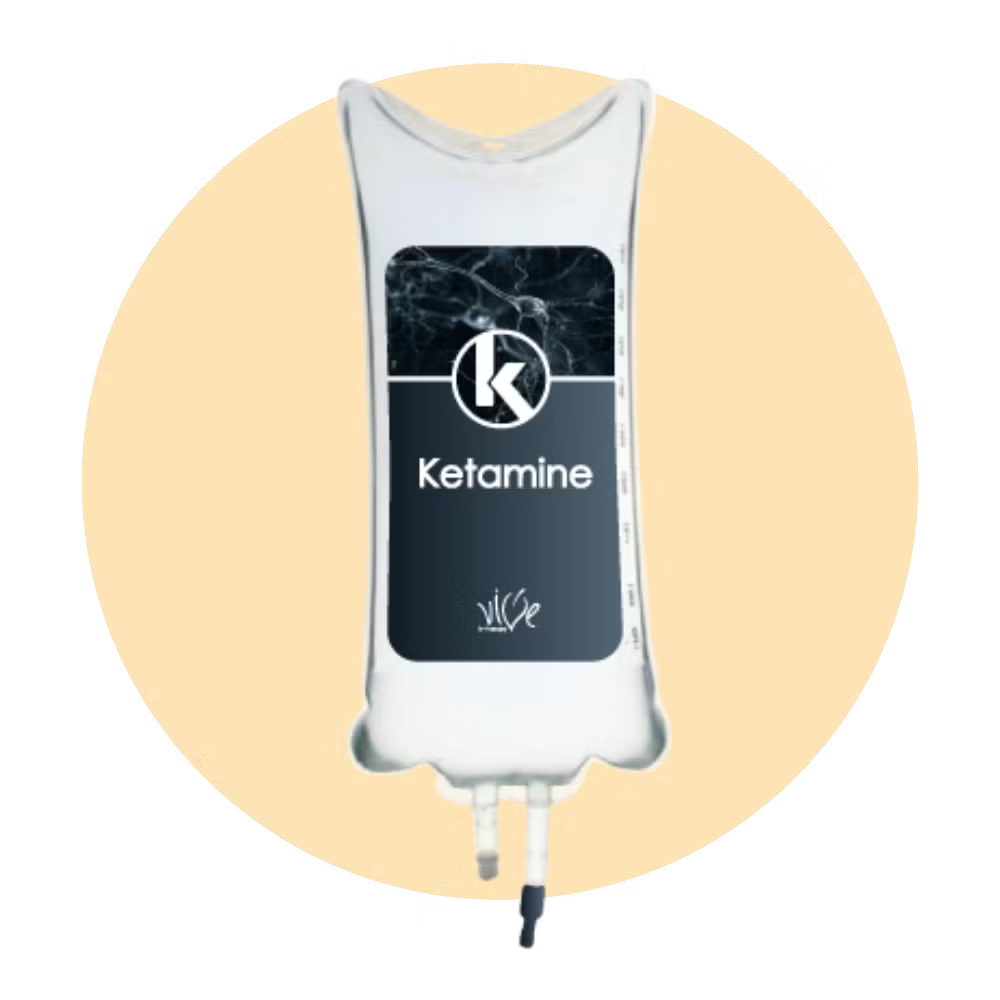
Breakthrough Relief for Treatment-Resistant Conditions
Every year, over 16 million Americans experience major depression, with about one-third showing resistance to antidepressants. Intravenous Ketamine infusions provide breakthrough relief for treatment-resistant depression, PTSD, and chronic pain.
A closer look at Ketamine Infusion

IV Ketamine, an anesthetic and pain reliever used in surgeries for decades, is now recognized for its effectiveness in low-dose treatments, balancing brain chemicals associated with mental health disorders.
Ketamine treatment for depression is thought to work by facilitating the growth of new neural pathways, placing the brain in a state of neuroplasticity. Neuroplasticity allows for our minds to create thinking patterns and engage in new positive routines that alleviate depression. Traditional oral antidepressants typically work on serotonin, norepinephrine neurotransmitters in the brain, however, ketamine acts on an entirely different neurotransmitter called glutamate. Glutamate regulates emotions, memory, neuroplasticity, and other cognitive processes. It also stimulates the growth of new synapses (neural connections) between brain cells.
Hundreds of research studies show that ketamine treatment for depression is highly effective and rapid-acting. Ketamine is an innovative and newer approach that very often works even in individuals that have not benefited from multiple trials of different oral antidepressants.
Emerging studies also suggest its potential for anxiety relief, even for patients who are treatment resistant.
Treatment Process
Step 1
Initial Consultation
During your initial consultation, our clinician will review your medical history, mental health concerns, and treatment goals to determine if IV ketamine therapy is suitable for you.
Step 2
Treatment Plan
Following the consultation, we'll develop a personalized treatment plan tailored to your needs, outlining the frequency and duration of IV ketamine sessions along with any additional supportive therapies.
Step 3
IV Ketamine Sessions
In a comfortable and monitored setting, you'll receive the IV ketamine infusion administered by our healthcare professional, which typically lasts between 40 minutes to an hour.
Step 4
Ongoing Monitoring
After each session, we'll provide personalized post-infusion care, monitor your progress closely, and make any necessary adjustments to your treatment plan to optimize outcomes.






Frequently Asked Questions
These FAQs provide basic information about Roseville Center and treatments offered, but patients should always consult their healthcare provider for personalized advice and guidance.
HOW DOES KETAMINE PROVIDE RELIEF?
In addition to being safe, ketamine is fast acting. It quickly balances the activity of a neurotransmitter called glutamate, which in turn lessens the symptoms of mental health disorders such as depression.
HOW QUICKLY DOES KETAMINE WORK?
Following an IV infusion of ketamine, most patients see an improvement within hours. By comparison, commonly used antidepressants such as selective serotonin reuptake inhibitors take weeks to produce symptom relief.
WHAT CONDITIONS ARE TREATABLE WITH KETAMINE?
Extensive research shows that ketamine is exceptionally useful for treatment-resistant depression. In addition to serving as a general antidepressant, recent landmark studies support its benefit for treating acute suicidality.
Studies also indicate that ketamine is beneficial for other mental health conditions such as anxiety, particularly in patients who don’t respond to other medications. Further data suggest that Ketamine may be helpful in treating bipolar disorder, post-traumatic stress disorder (PTSD), and obsessive-compulsive disorder (OCD).
Ketamine has a successful history of relieving chronic pain. It treats a range of chronic pain disorders including complex regional pain syndrome and some neuropathic pain conditions such as fibromyalgia.
HOW IS KETAMINE ADMINISTERED?
Ketamine may be administered in several ways, but intravenous (IV) infusion is the most successful. The treatment is administered in a quiet, private suite at Roseville Center.
Most treatments take about 90 minutes which includes preparation time, the ketamine infusion, and post-infusion monitoring. During this time, most patients prefer to close their eyes and rest quietly or listen to soft music while they relax. You will be continuously monitored by medical staff during the entire process. Following your infusion, you can’t drive for the rest of the day, so you will need to have a family member or friend drive you home.